Building a community, course, or membership often starts with a simple idea. You have something valuable to teach, people you want to bring together, and an idea of what you’d like to create.
Turning that idea into something people can join takes more than choosing a platform. Facebook, Circle, Skool, LearnDash, Kajabi, and Thinkific all have their place, and each one offers different strengths depending on what you’re building.
How will people join? What happens after they register? How will onboarding work? When should emails be sent? How will participants access the course, community, or coaching sessions?
Choosing the platform is only one decision. Everything that comes after deserves just as much thought.
The short version:
- Choosing a platform is only the beginning. A successful course, membership, or community depends on thoughtful planning long before and after launch.
- Every touchpoint matters. Onboarding, communication, automations, and clear next steps all shape how participants experience your program.
- Growth comes from connected systems. When your website, emails, course, community, and member journey work together, it’s easier to create an experience that keeps people engaged over time.
Keeping a Community Active
Launching a community is only the beginning. Keeping people engaged over time requires ongoing attention.
During the first few weeks, many members are discovering the community at the same time. They’re introducing themselves, asking questions, and getting familiar with the space. As more people join, that begins to change.
New members are just getting started, while others have already been part of the community for weeks or months. Some enjoy joining every discussion, while others prefer to read updates quietly and participate only when a topic feels especially relevant to them.
Communities naturally include people who participate in different ways and at different times. Some visit regularly, while others return after receiving an email, seeing a new discussion, or hearing about an upcoming event.
That’s why communities benefit from regular communication, fresh discussion topics, live events, and opportunities for members to contribute.
New members need help feeling welcome, while existing members need reasons to return and continue participating.
Designing the Learning Experience
An online course introduces a different set of planning decisions.
Choosing the right platform certainly matters. For WordPress clients, we often recommend LearnDash, while Kajabi and Thinkific each offer strengths depending on the goals of the business. Even so, the platform is only one part of what participants experience after they enroll.
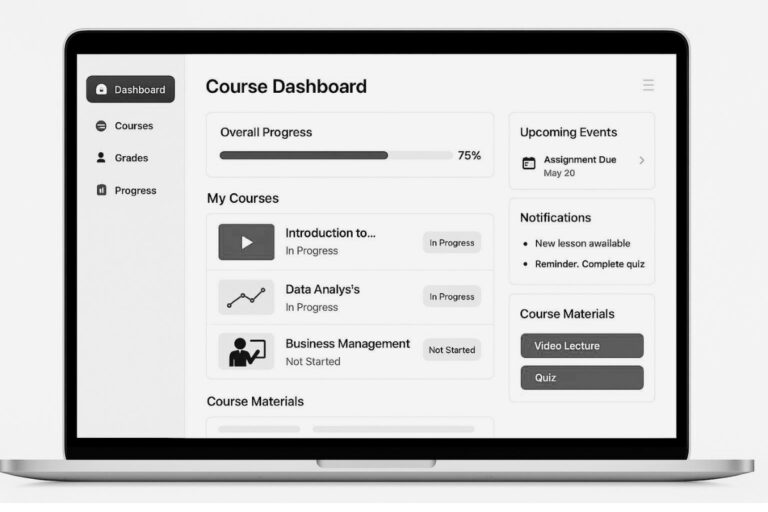
A course isn’t simply a collection of lessons. It also includes the way participants move through the material, the guidance they receive along the way, and the communication that helps them continue making progress.
Planning a course often means answering questions like:
- Is it obvious where to begin?
- Do participants always know what comes next?
- Can they easily find the resources they need?
- Do reminders and emails arrive when they’re most helpful?
When those details are planned from the beginning, participants spend less time figuring out how the course works and more time focusing on what they came to learn.
Building a Connected Program
Programs often bring several experiences together in one place. A course may include a private community where members can ask questions between lessons. Coaching sessions may take place throughout the month, while downloadable resources, live Q&A sessions, and evergreen webinars become available over time. Some programs also include different membership levels, giving participants access to different content or services.
As more pieces are added, planning extends beyond each individual feature. Someone joining the program needs to know where to begin. Members should understand what they have access to, where to find it, and what happens next. Coaching calls need registrations and reminders. New resources need to be easy to locate. Community discussions should continue supporting participants throughout the program.
Looking at each of those pieces separately is only part of the process. Planning how they fit together helps create a program that’s easier to manage and easier for participants to move through from beginning to end.


The Experience Begins Before Anyone Joins
People may discover your business through a social post, a recommendation, a podcast interview, or a Google search. From there, they visit your website, explore what’s included, read through your program details, and decide if it’s something they’d like to be part of.
Before registering, they’re already looking for answers. They want to understand what’s included, how the program works, what happens after they sign up, and if it aligns with what they’re looking for. Finding that information should feel straightforward, not like another task to complete.
The website, registration process, confirmation emails, and onboarding all contribute to those first impressions. When each step is clear, participants can move confidently from discovering the program to becoming part of it.
As Your Program Grows
A course, community, or membership will often continue changing long after it’s launched. New resources are added, live sessions become part of the program, members ask questions that inspire new content, and additional services may be introduced as the business grows.
Growth doesn’t always come from building something completely new. More often, it comes from improving what’s already there, responding to what members need, and making thoughtful decisions as the program continues to evolve.
That’s why it’s helpful to think beyond the launch itself. A well-planned foundation makes it easier to introduce new ideas over time without losing the structure that supports the people already taking part.